
How to Search Criminal Dockets
No single anonymous search covers every criminal court in Murray County. For a Superior Court felony, the Georgia Courts E-Access directory is the official starting point. Its Murray County route leads to PeachCourt. The landing page wants an account before any search area opens. So treat it as a portal. It is not an open name-search database, and remember that an empty result never proves a case is absent.
Gather the defendant's full legal name and alternate spellings. Add an approximate filing year, and the complete case number if you have it. A court-assigned number can differ from a warrant or citation number. When the online route stalls, call or visit Donna Flood, Clerk of Superior Court. The office sits at 121 North 4th Avenue, Chatsworth, Georgia 30705. The office lists 706-695-2932. Weekday hours run 8:30 a.m. to 5:00 p.m. Ask the criminal desk whether plain inspection, an ordinary copy, or a certified copy fits your need.
- Identify the court from the notice, citation, warrant paperwork, or case number.
- Use E-Access and PeachCourt for a Murray Superior case, understanding that an account is required.
- Contact the correct clerk by phone or at the counter when the provider does not show the record.
- Compare the docket entries with the current court calendar and any filed order.
- Request the specific entry or certified document from its custodian when proof is needed.
Murray Criminal Records Take Four Paths
Jurisdiction comes first in any Murray County criminal docket search. Felonies belong to Superior Court. That court is part of the Conasauga Judicial Circuit. Magistrate Court covers warrant applications, pre-warrant matters, preliminary hearings, and some minor criminal processes. County traffic misdemeanors from agencies named by the county go to Probate Court. Chatsworth and Eton municipal courts keep their own traffic and ordinance cases. Juvenile delinquency and juvenile traffic records stay confidential. Juvenile Court rules require it.
| Record clue | Likely custodian | Best first step |
|---|---|---|
| Felony filing or indictment | Superior Court Clerk | E-Access, PeachCourt, or criminal desk |
| Warrant or preliminary matter | Magistrate Court | Contact the Magistrate clerk |
| County traffic citation | Probate Court | Use the citation and court notice |
| City ordinance or traffic case | Chatsworth or Eton court | Use that city's court route |
Federal charges sit outside this map entirely. Murray County falls in the Rome Division of the Northern District of Georgia, and those cases run through PACER or the federal clerk, not a county criminal docket. The split matters. Searching one provider and assuming it covers every court in the county is the most common mistake.
What a Criminal Docket Shows
A docket lists activity in order. It is not a story of guilt or innocence. A Murray County entry may name a filing, a setting, a motion, a plea, an order, or a disposition. The calendar can add a future event. It will not show the full charge text, the evidence, the sentence, or the final result. Read every field with its date and source in view. When an entry points to an order, you may need to request the order itself from Donna Flood's office.
| Case number | The court identifier, including year, court abbreviation, and any suffix. Ask for the full value rather than guessing a format. |
|---|---|
| Charge or allegation | The filed accusation and cited offense, which is not a conviction. |
| Setting | Arraignment, calendar call, non-jury, motion, or jury date. |
| Filing or motion | A submitted paper or request; filing alone does not show that the judge granted it. |
| Disposition | The recorded outcome, such as dismissal, plea, verdict, or sentence, if entered. |
Murray Calendar Is Not Disposition
The official Conasauga Judicial Circuit calendar uses labels like Criminal Calendar Call, Arraignments, Criminal Non-Jury, and jury trials. It tags Murray and Whitfield settings by county. Those labels tell you when and where a stage is set. Nothing more. They do not prove a guilty plea, a conviction, a sentence, or a dismissal.
Note the judge column, the Murray marker, the setting type, and the date, then check them against the case docket itself. Dates shift. For the latest posted PDF, the official Murray County calendar page is the right stop. The Clerk or circuit administration can clear up a confusing notice. Never lean on a stale downloaded calendar when an appearance or filing deadline rides on it.
Stages on a Criminal Docket
A Superior Court criminal record can pass through several entries before anything resolves. An accusation or indictment opens the filed court track. Arraignment is the formal appearance and plea stage. Motion hearings, non-jury settings, and calendar calls that organize trial readiness may come next. A trial setting is not a verdict. A plea entry, likewise, must be read beside the resulting order or sentence rather than guessed from a calendar label.
Murray docket flow: Charge Filed › Arraignment › Pretrial Settings › Plea or Trial › Disposition › Sentencing
Not every case hits every step, and a reset can add entries. "Nolle prosequi" means the prosecutor ended the charge. A dismissal can carry different terms. A warrant application comes early. It may never grow into a Superior Court prosecution at all. Use status words only when the docket or a filed order backs them up.
Murray Warrant Searches Need Care
Murray Magistrate materials include pre-warrant applications, and Georgia's court structure puts warrants and preliminary hearings inside Magistrate functions. No anonymous Murray warrant database is open to the public. Current status has to come from the proper court or law-enforcement custodian, within whatever lawful access limit applies.
Do not equate a warrant with a conviction. A warrant authorizes a step or begins a process. Later filings, transfer to Superior Court, dismissal, or disposition may appear in a different record.
Bring the date, the applicant or agency details, and any assigned number. Ask the Magistrate clerk. If the matter later reached Superior Court, pull both files. The earlier one may not hold the final outcome. That is also why a jail list, a criminal-history report, or a traffic payment result can never replace the court's own docket.
Which Court Holds Criminal Dockets
Felony prosecutions in Murray County belong to the Superior Court of the Conasauga Judicial Circuit. Donna Flood, Clerk of Superior Court, maintains the criminal filings and hands out certified documents. One caution applies here. The circuit also covers Whitfield County. Circuit-wide workload figures and shared calendar pages are not Murray-only case counts. Check for the Murray marker on a shared calendar. That keeps an entry tied to the right Murray County court docket.
The lower courts keep their own records. Probate Court's traffic page handles local citations. Issuing agencies include the Murray County Sheriff, Georgia State Patrol, the Department of Natural Resources, and the Motor Vehicle Compliance Division or Department of Transportation. Chatsworth and Eton run separate city channels for their cases. Juvenile Court hears delinquency and juvenile traffic matters, but those files are confidential. Ask that clerk about lawful access instead of working around the restriction.
Murray Juvenile Dockets Stay Separate
People often misread JDEX. It is a statewide exchange of juvenile legal and detention history. Only authorized users may open it, and it is not a public repository of certified documents. An ordinary Murray County criminal docket search will not open juvenile files. Have a lawful basis to seek a juvenile record? Then contact the Murray Juvenile Court clerk and ask how the process works. The JDEX access screen shows that restricted boundary through its login wall. It is not an invitation to attempt unauthorized access.
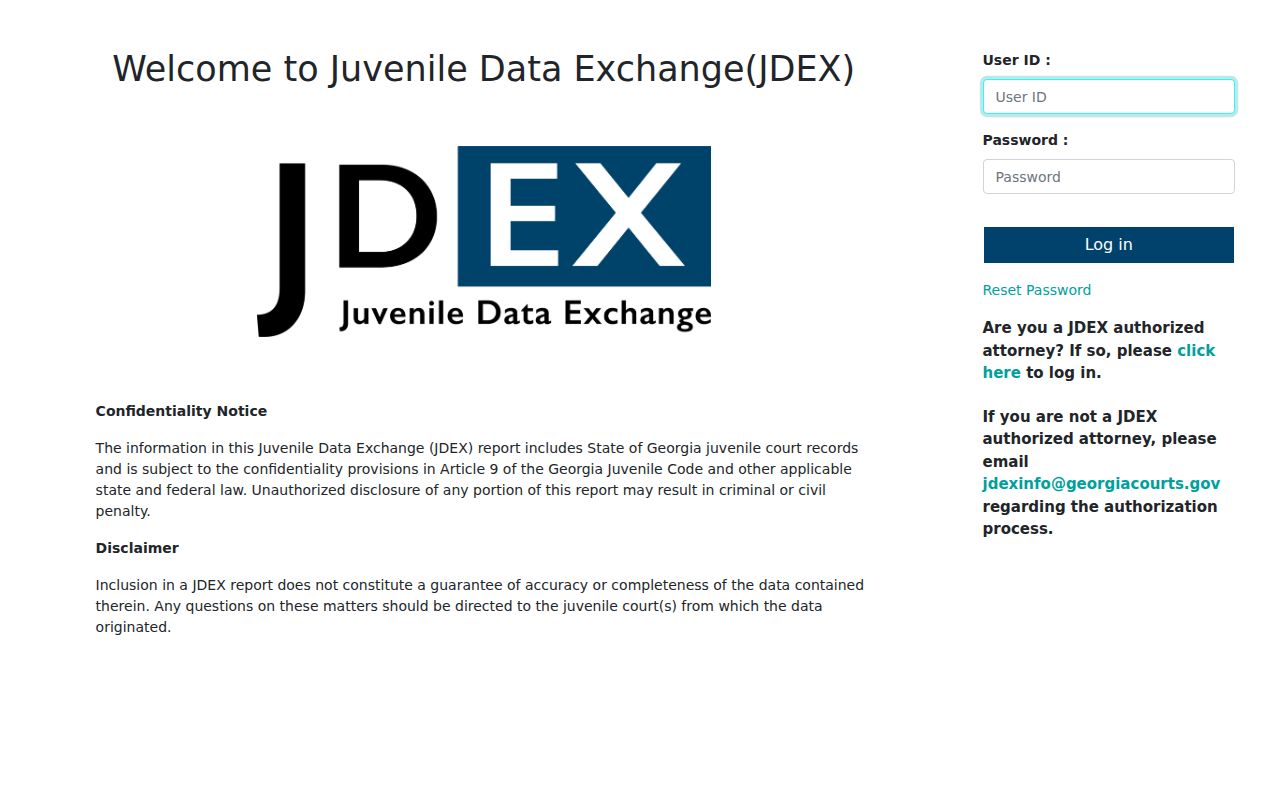
The separation exists for a reason. It shields confidential juvenile information and steers each request to the correct clerk. That also keeps adult Superior Court matters and juvenile status from being blended into one inaccurate docket search result.
Murray Record Restriction Is Not Erasure
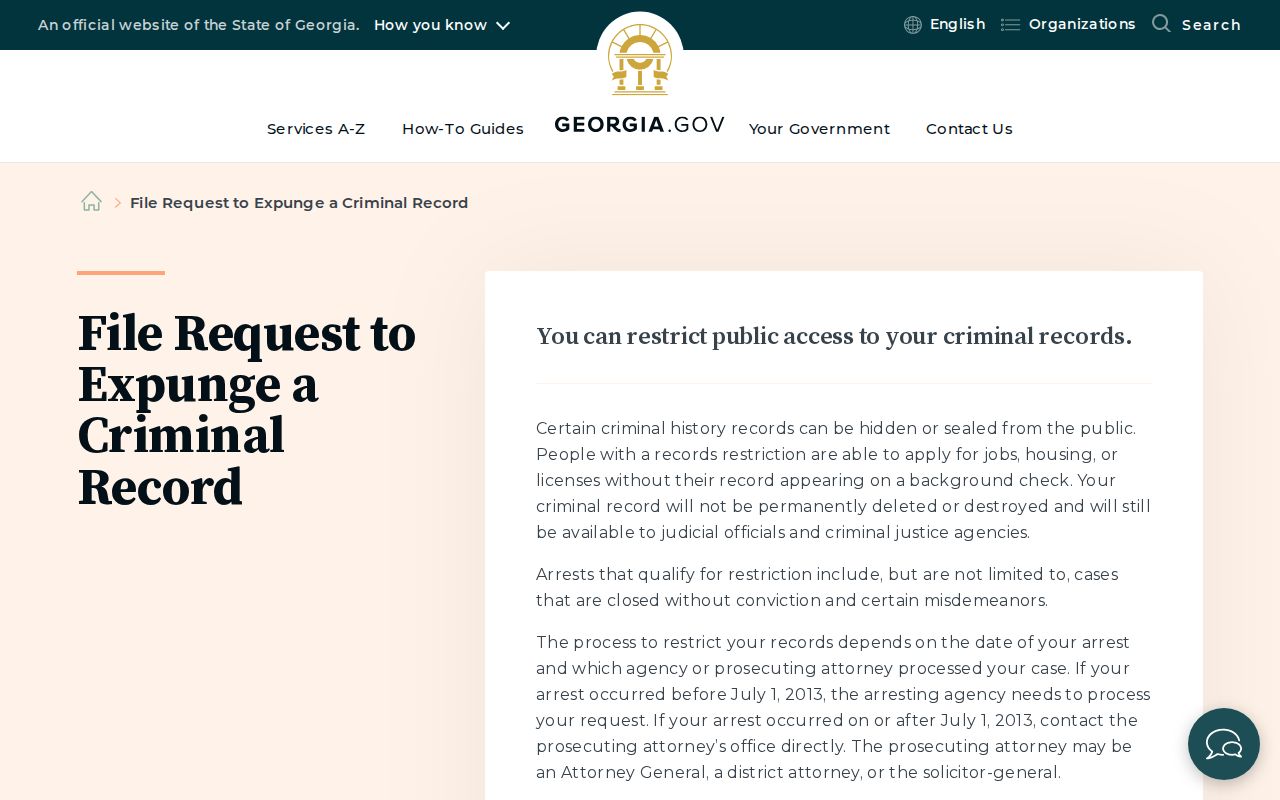
Georgia's term is record restriction. The state's own explanation is blunt: restriction does not destroy the criminal-history record underneath. Criminal-justice agencies can still see it. Dissemination to everyone else is limited under the applicable process. The right route depends on the arrest date, the disposition, the prosecutor, and the agency involved. Current instructions matter far more than an old form. The Georgia Courts restriction overview walks through the statewide process a Murray County applicant will face.
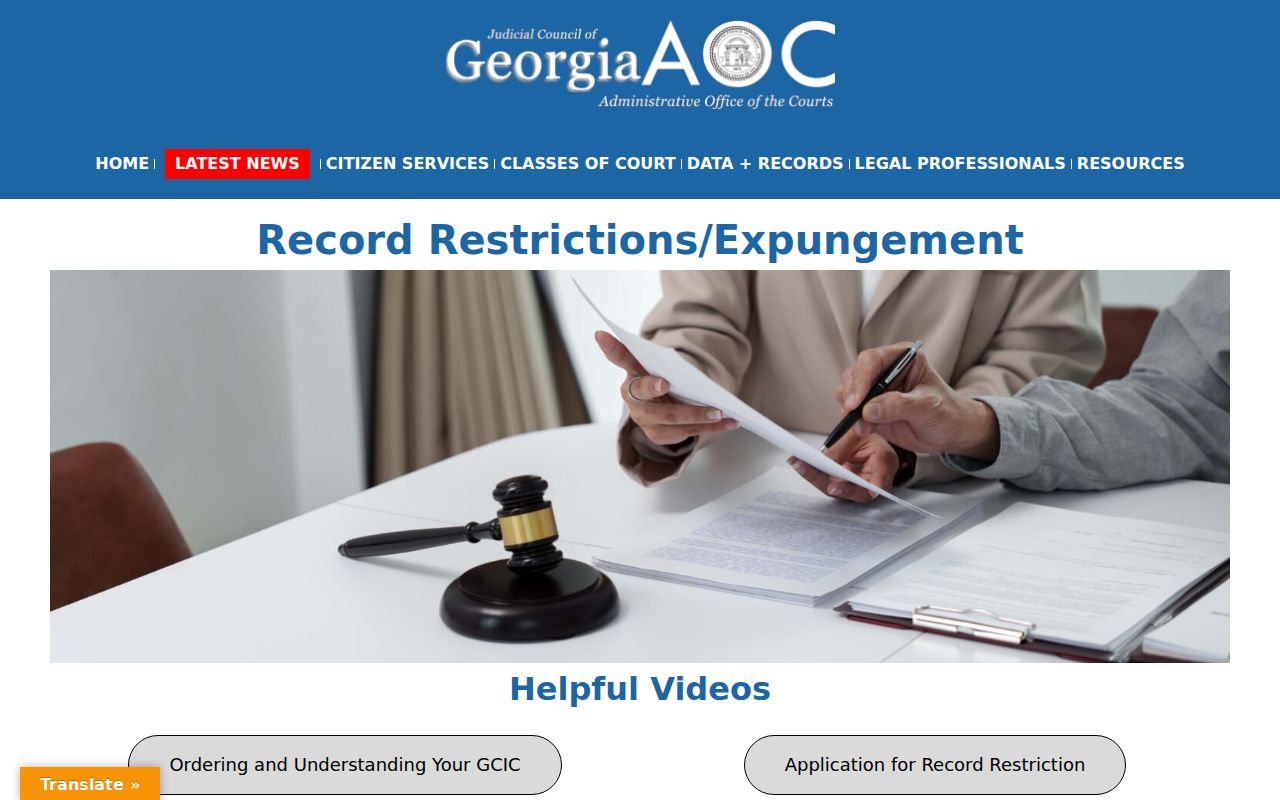
A second official page covers the filing and review steps. Murray County users may run into both court and agency records during one inquiry, so both are worth reading. The Georgia.gov restriction request page lays out how to file that request.
Public Access to Criminal Dockets
Georgia court records are open by default. Law, rule, or court order can limit access. Uniform Superior Court Rule 21 supplies the sealing framework. When a court seals something, it weighs privacy or harm against public access. The order should say what is restricted, why, and for how long. Redaction works differently. It just removes protected identifiers, and the public filing stays available.
Need a Murray Superior record? Ask the Clerk for inspection, or ask for the exact document you need. A written request can list the court, case number, filing year, document title, and date range. State open-records guidance favors a clear written request. It generally calls for a response within three business days, or an estimate with a legal explanation if more time is required. The office does not have to create a new report that does not exist.
Access boundaries: Juvenile files, sealed material, restricted criminal history, protected identifiers, and some family-violence information may not be open in the same form as an ordinary criminal docket.
When only part of a document is protected, ask whether a redacted copy exists. Need a certified copy? Say so up front and request the current cost. Court records can change after a search, so confirm the latest entry with the originating Murray County clerk before you rely on it.